


Welcome to Bin Zhang’s Personal Homepage!
I am an Assistant Professor/Postdoctoral Fellow at the Institute of Automation, Chinese Academy of Sciences (CASIA, 中国科学院自动化研究所), working in the Key Laboratory of Cognition and Decision Intelligence for Complex Systems. Advised by Prof. Guoliang Fan (范国梁), my research spans Reinforcement Learning (RL), Multi-agent Systems, and Large Language Model (LLM) Agents, with a focus on:
- Developing adaptive AI algorithms for multi-agent cooperation/competition in complex environments.
- Advancing LLM agents’ collaborative reasoning and tool-learning capabilities for autonomous systems.
I also work closely with Prof. Zhiwei Xu (徐志伟) (Assistant Professor, Shandong University). And I have published 30+ papers at the international AI conferences.
If you are interested with my experience or research. Plese feel free to contact with me via Email or Wechat.


🔥 News
- 2026.09: 🎉🎉 TrustFlow has been accepted to NeurIPS 2026!
- 2026.08: 🎉🎉 AirBranching has been accepted to ESWA!
- 2026.08: 🎉🎉 SGA-ACR has been accepted to ICONIP 2026!
- 2026.06: 🎉🎉 LeanRefiner has been accepted to AI for Math Workshop @ ICML 2026!
- 2026.05: 🎉🎉 SQLBench and LLaMAC have been accepted to CASE 2026!
- 2026.05: 🎉🎉 SIDIFF has been accepted to RLC 2026!
- 2026.04: 🎉🎉 DECOR has been accepted to IJCAI 2026!
- 2026.02: 🎉🎉 QSIM has been accepted to ICAPS 2026!
- 2026.01: 🎉🎉 PRGS and Mamba-Branching have been accepted to ICLR 2026!
- 2025.12: 🎉🎉 One paper has been accepted to AAMAS 2026!
- 2025.11: 🎉🎉 One paper has been accepted to AAAI 2026!
- 2025.05: 🎉🎉 One paper has been accepted to ICML 2025!
- 2025.04: 🎉🎉 One paper has been accepted to IJCNN 2025!
- 2025.02: 🎉🎉 One paper has been accepted to TMLR & ICLR 2025 Workshop on DATA-FM!
- 2025.01: 🎉🎉 One paper with co-first authorship has been accepted to DASFAA 2025!
- 2024.12: 🎉🎉 One paper has been accepted to AAMAS 2025!
- 2024.12: 🎉🎉 One paper has been accepted to AAAI 2025!
- 2024.10: 🎉🎉 One paper with co-first authorship has been accepted to EMNLP 2024 Industry Track!
- 2024.08: 🎉🎉 Two papers have been accepted to ICONIP 2024!
- 2024.05: 🎉🎉 One first-author paper has been accepted to ICML 2024!
- 2024.04: 🎉🎉 One paper has been accepted to IJCAI 2024!
- 2024.03: 🎉🎉 One paper has been accepted to IJCNN 2024!
- 2024.02: 🎉🎉 One first-author paper has been accepted to ICLR 2024 Workshop on LLM Agents!
- 2024.02: 🎉🎉 One paper with co-first authorship has been accepted to ICLR 2024 Workshop on LLM Agents!
- 2023.12: 🎉🎉 Two papers have been accepted to AAMAS 2024!
- 2023.12: 🎉🎉 One paper has been accepted accepted to ICASSP 2024!
- 2023.09: 🎉🎉 One paper has been accepted to NeurIPS 2023!
- 2023.04: 🎉🎉 One first-author paper has been accepted to IJCAI 2023!
📖 Experience
- 2025.07 - Present
Assistant Professor in Institute of Automation, Chinese Academy of Sciences
- 2020.09 - 2025.06
- 2016.09 - 2020.06
B.E. in School of Control Science and Engineering, Shandong University
💬 Research Interest
Reinforcement Learning
Value decomposition, offline and model-based RL, and trust-region policy optimisation for sequential decision-making.
Multi-Agent Coordination
Credit assignment, communication, role specialisation and equilibrium learning in cooperative and competitive multi-agent systems.
LLM Agents
Tool learning, Text-to-SQL and text-based games, with a focus on planning, verification and collaborative reasoning.
📝 Publications
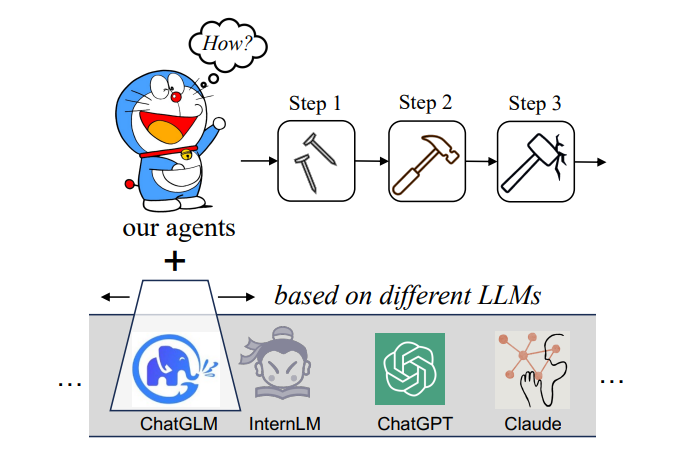
TPTU: Task Planning and Tool Usage of Large Language Model-Based AI Agents
Jingqing Ruan, Yihong Chen, Bin Zhang, Zhiwei Xu, Tianpeng Bao, Guoqing Du, Shiwei Shi, Hangyu Mao, Ziyue Li, Xingyu Zeng, Rui Zhao
NIPS 2023 Workshop Project
We propose a structured framework tailored for LLM-based AI Agents and discuss the crucial capabilities necessary for tackling intricate problems.
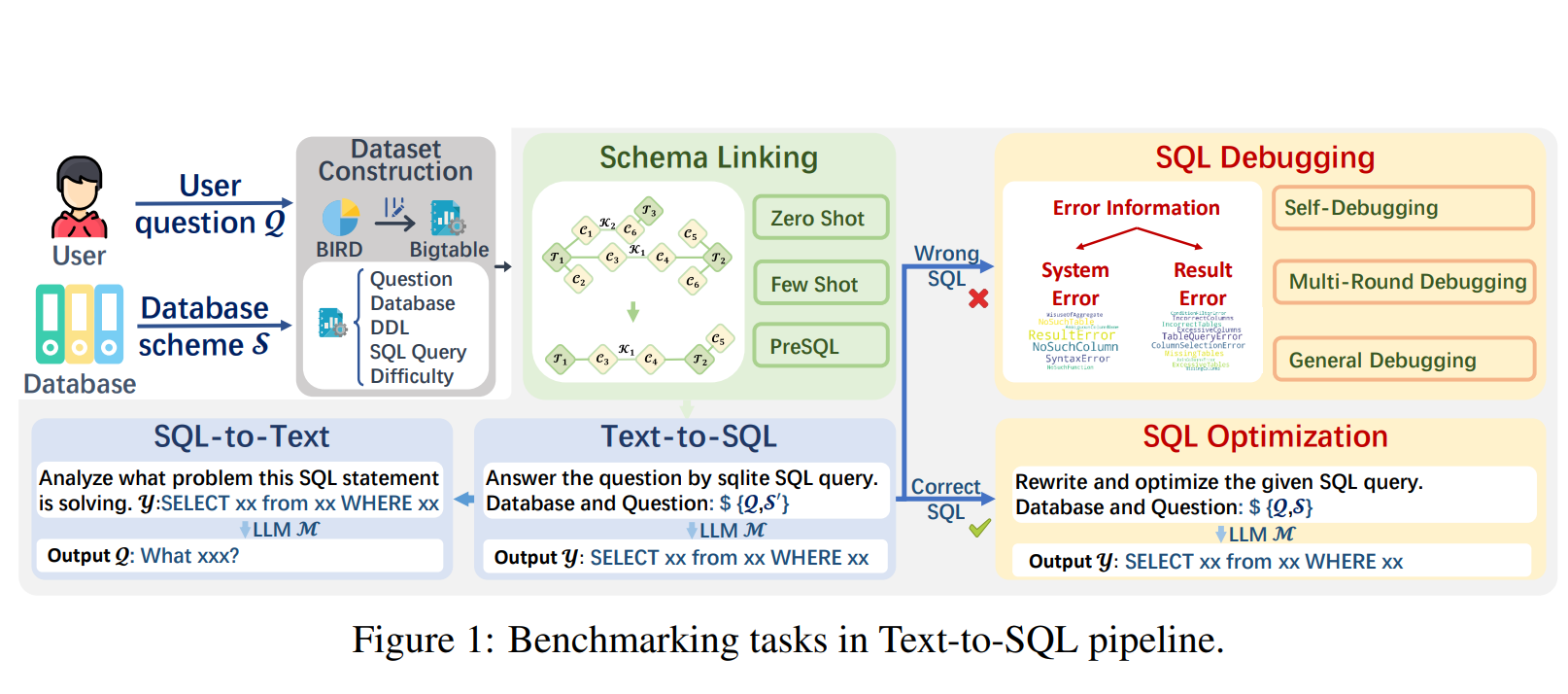
Benchmarking the Text-to-SQL Capability of Large Language Models: A Comprehensive Evaluation
Bin Zhang, Yuxiao Ye, Guoqing Du, Xiaoru Hu, Zhishuai Li, Sun Yang, Chi Harold Liu, Rui Zhao, Ziyue Li, Hangyu Mao
CASE 2026 Project
We evaluate LLMs through five Text-to-SQL related tasks, reveal performance differences and suggest task-specific optimization strategies.
TrustFlow: Adaptive Trust Calibration for Language Model Guided Reinforcement Learning
Hao Chen, Zhiwei Xu, Hu Fu, Yuelin Ma, Hangyu Mao, Yiqun Chen, Guoliang Fan, Bin Zhang.
NeurIPS 2026
We propose adaptive trust calibration for language-model-guided reinforcement learning, estimating when the agent should follow the language model’s guidance and when it should rely on its own policy.
Ce Zhang, Bin Zhang, Guoliang Fan.
ESWA
We learn branching variable selection for mixed-integer linear programming with adversarial inverse reinforcement learning, using a two-stage warm-up plus joint-reward scheme that lowers the demand for expert demonstrations and surpasses both imitation and plain reinforcement learning baselines.
Subgoal Graph-Augmented Planning for LLM-Guided Open-World Reinforcement Learning
Shanwei Fan, Bin Zhang, Zhiwei Xu, Yingxuan Teng, Siqi Dai, Lin Cheng, Guoliang Fan.
ICONIP 2026
We propose Subgoal Graph-Augmented Actor-Critic-Refiner (SGA-ACR), which grounds LLM subgoal generation in an environment-specific subgoal graph and structured entity knowledge and splits planning across several LLM roles, closing the gap between plausible plans and feasible behaviour.
LeanRefiner: Agentic Global-to-Local Optimization of Lean Proofs
Tian Cui, Bin Zhang, Changwei Wang, Zhiwei Xu, Zeyang Liu.
AI for Math Workshop @ ICML 2026
We optimise already-verified Lean proofs with a verifier-guided agentic framework that alternates global theorem-level restructuring with local pattern-guided reduction, shortening proofs while the Lean verifier guarantees the same theorem is still proved.
Bin Zhang, Hangyu Mao, Jingqing Ruan, et al.
CASE 2026
We develop LLaMAC, a modular actor-critic framework that controls LLM-based agents for large-scale decision-making, curbing hallucination and coordinating many agents while keeping token consumption tractable.
Beyond Local Views: Global State Inference with Diffusion Models for Cooperative MARL
Zhiwei Xu, Hangyu Mao, Nianmin Zhang, Shengtao Zhang, Xin Xin, Pengjie Ren, Dapeng Li, Bin Zhang, Guoliang Fan, Zhumin Chen, Changwei Wang, Jiangjin Yin
RLC 2026
We propose State Inference with Diffusion Models (SIDIFF), which reconstructs the global state from local observations alone so that agents can act on both the inferred global state and their own view under partial observability.
From Traits to Roles: Consensus-Guided Composition of Orthogonal Experts for Cooperative MARL
Yewei Zhou, Bin Zhang, Ying Zhou, Xuri Ge, Dapeng Li, Hangyu Mao, Pengjie Ren, Zhiwei Xu
IJCAI 2026
We propose DECOR, which models agent roles as dynamic compositions of orthogonal behavioural traits and uses an orthogonal mixture-of-experts to avoid destructive gradient interference in heterogeneous cooperative tasks.
Yuanjun Li, Bin Zhang, Hao Chen, Zhouyang Jiang, Dapeng Li, Zhiwei Xu
ICAPS 2026
We propose QSIM, which rebuilds the temporal-difference target with action-similarity weighting instead of the greedy joint action, mitigating the Q-value overestimation that the max operator causes in cooperative MARL.
Peak-Return Greedy Slicing: Subtrajectory Selection for Transformer-based Offline RL
Zhiwei Xu, Miduo Cui, Dapeng Li, Zhihao Liu, Haifeng Zhang, Hangyu Mao, Guoliang Fan, Bin Zhang
ICLR 2026
We propose Peak-Return Greedy Slicing, which estimates per-step returns with a maximum mean discrepancy estimator and greedily extracts high-return subtrajectories for Transformer training, with adaptive history truncation at inference to match the training scheme.
Towards Better Branching Policies: Leveraging the Sequential Nature of Branch-and-Bound Tree
Ce Zhang, Bin Zhang, Guoliang Fan
ICLR 2026
We propose Mamba-Branching, a branching policy that uses the Mamba state-space model to capture long sequential dependencies across branch-and-bound steps, with contrastive pre-training of variable embeddings, outperforming prior neural branching policies on real MILP instances.
Quality-Diversity for Multi-Agent Reinforcement Learning
Hao Chen, Pengyi Li, Bin Zhang, Hu Fu, Zhiwei Xu, Ce Zhang, Xinyue Lu, Guoliang Fan
AAMAS 2026
We propose MIQD, a mutual-information-enhanced quality-diversity framework that feeds fragment-based behavioural descriptors into the critic, replacing random exploration with informed diversity for more stable coverage in cooperative MARL.
Graph of Verification: Structured Verification of LLM Reasoning with Directed Acyclic Graphs
Jiwei Fang, Bin Zhang, Changwei Wang, Jin Wan, Zhiwei Xu
AAAI 2026
We propose the Graph of Verification (GoV), a node-block graph that adapts to different reasoning structures and supports multi-granular, localised verification of LLM reasoning, from formal proofs to informal narratives.
Reidentify: Context-Aware Identity Generation for Contextual Multi-Agent Reinforcement Learning
Zhiwei Xu, Kun Hu, Xin Xin, Weiliang Meng, Yiwei Shi, Hangyu Mao, Bin Zhang, Dapeng Li, Jiangjin Yin
ICML 2025
We propose Context-Aware Identity Generation (CAID), a causal Transformer decoder that produces agent identities aligning corresponding agents across problem variants, together with an action regulator that injects them into the action-value space for better policy reuse and generalisation.
Enhancing Branching Policy Generalization through Self-Supervised Adversarial Instance Augmentation
Ce Zhang, Bin Zhang, Guoliang Fan
IJCNN 2025
We introduce SATA, a self-supervised adversarial instance augmentation method that generates diverse training instances to improve the generalisation of learned branching variable selection policies in branch-and-bound.
QPO: Query-dependent Prompt Optimization via Multi-Loop Offline Reinforcement Learning
Yilun Kong, Hangyu Mao, Zhao Qi, Bin Zhang, Jingqing Ruan, Li Shen, Yongzhe Chang, Xueqian Wang, Rui Zhao, Dacheng Tao
TMLR
We introduce Query-dependent Prompt Optimization (QPO), which uses multi-loop offline reinforcement learning to fine-tune a small pretrained language model that generates prompts tailored to each input query, avoiding costly online interaction with the target LLM.
PET-SQL: A Prompt-enhanced Two-stage Text-to-SQL Framework with Cross-consistency
Zhishuai Li, Xiang Wang, Jingjing Zhao, Sun Yang, Guoqing Du, Xiaoru Hu, Bin Zhang, Yuxiao Ye, Ziyue Li, Rui Zhao, Hangyu Mao
DASFAA 2025
We present a two-stage text-to-SQL framework that prompts LLMs with a reference-enhanced representation of the schema and sampled cell values, then applies cross-consistency over the generated queries to cope with verbose databases and complex user intentions.
Unveiling Decision Intention for Cooperative Multi-Agent Reinforcement Learning
Zeren Zhang, Zhiwei Xu, Guangchong Zhou, Dapeng Li, Bin Zhang, Guoliang Fan
AAMAS 2025
We generate the decision intentions of agents with a diffusion model, first selecting task-crucial states through a polarisation index, so that humans can understand what a cooperative agent intends to do and agent strategies become more transparent.
Efficient Communication in Multi-Agent Reinforcement Learning with Implicit Consensus Generation
Dapeng Li, Na Lou, Zhiwei Xu, Bin Zhang, Guoliang Fan
AAAI 2025
We combine implicit consensus generation with efficient communication so that agents exchange only what is needed to reduce uncertainty about their teammates, significantly lowering communication overhead while preserving collaboration.
Stackelberg Decision Transformer for Asynchronous Action Coordination in Multi-Agent Systems
Bin Zhang, Hangyu Mao, Lijuan Li, Zhiwei Xu, Dapeng Li, Rui Zhao, and Guoliang Fan
ICML 2024
We propose the Stackelberg Decision Transformer (STEER), which handles hierarchical coordination among agents in both spatial and temporal contexts and converges to Stackelberg equilibrium solutions.
PTDE: Personalized Training with Distilled Execution for Multi-Agent Reinforcement Learning
Yiqun Chen, Hangyu Mao, Jiaxin Mao, Shiguang Wu, Tianle Zhang, Bin Zhang, Wei Yang, Hongxing Chang
IJCAI 2024
We propose Personalized Training with Distilled Execution (PTDE), which personalises global information for each agent and distils it into the agent’s local information, showing that one shared global signal is not enough for optimal performance.
Bin Zhang, Hangyu Mao, Jingqing Ruan, et al.
ICLR 2024 Workshop on LLM Agents
We develop LLaMAC, a modular actor-critic framework that controls LLM-based agents for large-scale decision-making, curbing hallucination and coordinating many agents while keeping token consumption tractable.
Boosting Task Planning and Tool Usage of Large Language Model-based Agents in Real-world Systems
Yilun Kong, Jingqing Ruan, Yihong Chen, Bin Zhang, et al.
EMNLP 2024 Industry Track
We introduce a comprehensive framework that strengthens the task planning and tool usage abilities of LLM-based agents in real-world systems, tackling the huge number of available APIs, complex multi-step tasks and prompt length limits.
SGCD: Subgroup Contribution Decomposition for Multi-Agent Reinforcement Learning
Hao Chen, Bin Zhang, Guoliang Fan.
IJCNN 2024
We propose SGCD, a subgroup contribution decomposition method that introduces subgroups and inner subgroups and distributes contributions with Shapley values, giving a more compact and flexible view of team structure.
PDiT: Interleaving Perception and Decision-making Transformers for Deep Reinforcement Learning
Hangyu Mao, Rui Zhao, Ziyue Li, Zhiwei Xu, Hao Chen, Yiqun Chen, Bin Zhang, et al.
AAMAS 2024
We propose the Perception and Decision-making Interleaving Transformer (PDiT), which cascades a patch-level perceiving Transformer with a deciding Transformer conditioned on returns, perception output and past actions, and also yields explainable attention patterns.
From Explicit Communication to Tacit Cooperation: A Novel Paradigm for Cooperative MARL
Dapeng Li, Zhiwei Xu, Bin Zhang, and Guoliang Fan.
AAMAS Extended Abstract 2024
We propose a paradigm that gradually shifts from explicit communication during early training to tacit cooperation at execution, keeping the benefit of shared signals without the practicality cost of continuous communication.
Adaptive Parameter Sharing for Multi-Agent Reinforcement Learning
Dapeng Li, Na Lou, Bin Zhang, Zhiwei Xu, Guoliang Fan
ICASSP 2024
Inspired by functional specialisation in the brain, we propose a parameter sharing method that maps each type of agent to different regions of a shared network, producing differentiated subnetworks without losing scalability.
Decentralized Extension for Centralized Multi-Agent Reinforcement Learning via Online Distillation
Zeren Zhang, Bin Zhang, Guangchong Zhou, Dapeng Li, Zhiwei Xu and Guoliang Fan
ICONIP 2024
We introduce OLEN, an online distillation framework that transfers knowledge from a high-performing centralised MARL algorithm into fully decentralised policies during training, making it compatible with any centralised method.
GATE: Guided Contrastive State Space for Multi-Agent Reinforcement Learning
Hao Chen, Bin Zhang and Guoliang Fan
ICONIP 2024
We propose GATE, a guided contrastive state space method that uses contrastive learning to steer agents towards superior states and away from inferior ones, making better use of experience and accelerating convergence.
Dual Self-Awareness Value Decomposition Framework without Individual Global Max for Cooperative MARL
Zhiwei Xu, Bin Zhang, Dapeng Li, Guangchong Zhou, Zeren Zhang, Guoliang Fan
NeurIPS 2023
We propose a dual self-awareness value decomposition framework that fully rejects the individual-global-max premise, pairing an ego policy for action selection with an alter-ego value function for credit assignment.
Bin Zhang, Lijuan Li, Zhiwei Xu, Dapeng Li, Guoliang Fan
IJCAI 2023
We build a spatio-temporal sequential decision-making structure from the Markov game and derive an N-level policy model that induces Stackelberg equilibrium through asynchronous action coordination.
SEA: A Spatially Explicit Architecture for Multi-Agent Reinforcement Learning
Dapeng Li, Zhiwei Xu, Bin Zhang, Guoliang Fan
IJCNN 2023
We propose a spatially explicit architecture that lets agents share neighbourhood and global information through an encoder-decoder built on spatial positions, inspired by point-cloud processing, and it drops into existing MARL methods.
Consensus Learning for Cooperative Multi-Agent Reinforcement Learning
Zhiwei Xu, Bin Zhang, Dapeng Li, Zeren Zhang, Guangchong Zhou, Hao Chen, Guoliang Fan
AAAI 2023
Inspired by viewpoint invariance and contrastive learning, we propose consensus learning, in which agents infer the same discrete consensus from local observations, restoring a shared signal that is missing during decentralised execution.
HAVEN: Hierarchical Cooperative Multi-Agent Reinforcement Learning with Dual Coordination Mechanism
Zhiwei Xu, Yunpeng Bai, Bin Zhang, Dapeng Li, and Guoliang Fan
AAAI 2023
We propose HAVEN, a hierarchical value decomposition framework with a dual coordination mechanism that regularises both inter-level and inter-agent policies to stabilise concurrent optimisation in fully cooperative tasks.
Mingling Foresight with Imagination: Model-Based Cooperative Multi-Agent Reinforcement Learning
Zhiwei Xu, Dapeng Li, Bin Zhang, Yuan Zhan, Yunpeng Bai, and Guoliang Fan
NeurIPS 2022
We propose an implicit model-based cooperative MARL method built on value decomposition, letting agents interact with a learned virtual environment to evaluate actions and easing the compounding model error that plagues multi-agent model learning.
Multi-Agent Hyper-Attention Policy Optimization
Bin Zhang, Zhiwei Xu, Yiqun Chen, Dapeng Li, Yunpeng Bai, Guoliang Fan, and Lijuan Li
ICONIP 2022
We propose a state-conditioned hyper-attention game abstraction that helps the centralised critic integrate the most relevant information from complex agent interactions, and add a point-probability-distance penalty to stabilise trust-region updates.
Efficient Policy Generation in Multi-Agent Systems via Hypergraph Neural Network
Bin Zhang, Yunpeng Bai, Zhiwei Xu, Dapeng Li, and Guoliang Fan
ICONIP 2022
We adaptively construct a hypergraph over agents to represent their interactions and extract neighbourhood-aware representations, presenting two actor-critic variants (HGAC and ATT-HGAC) that improve cooperation among many agents.
Cooperative Multi-agent Reinforcement Learning with Hypergraph Convolution
Yunpeng Bai, Chen Gong, Bin Zhang, Guoliang Fan, Xinwen Hou, Yu Liu
IJCNN 2022
We propose HGCN-MIX, which models agents and their relationships as a hypergraph and combines hypergraph convolution with value decomposition, alleviating the lazy-agent problem in cooperative tasks.
SIDE: State Inference for Partially Observable Cooperative Multi-Agent Reinforcement Learning
Zhiwei Xu, Yunpeng Bai, Dapeng Li, Bin Zhang, and Guoliang Fan
AAMAS 2022
We propose SIDE, a value decomposition framework that removes the need for the global state by solving optimal control and state inference jointly, so training works from incomplete and noisy observations.
Learning to Coordinate via Multiple Graph Neural Networks
Zhiwei Xu, Bin Zhang, Yunpeng Bai, Dapeng Li, and Guoliang Fan
ICONIP 2022
We introduce MGAN, which combines graph convolutional networks with value decomposition and learns agent representations from multiple perspectives, allocating attention among agents for better credit assignment.
🧑🎨 Preprint
arXiv:2605.26646UnityMAS-O: A General RL Optimization Framework for LLM-Based Multi-Agent Systems. Yiqun Chen, Yiqun Chen, Wei Yang, Erhan Zhang, Shijie Wang, Qi Liu, Zechun Niu, Bin Zhang, Haitao Li, Rui Li, Lingyong Yan, Jinyuan Feng, Biqing Qi, Xiaochi Wei, Yan Gao, Yi Wu, Yao Hu, Jiaxin Mao.arXiv:2603.16215CoMAI: A Collaborative Multi-Agent Framework for Robust and Equitable Interview Evaluation. Gengxin Sun, Ruihao Yu, Liangyi Yin, Yunqi Yang, Bin Zhang, Zhiwei XuarXiv:2504.12961QLLM: Do We Really Need a Mixing Network for Credit Assignment in Multi-Agent Reinforcement Learning?. Zhouyang Jiang, Bin Zhang, Yuanjun Li, Zhiwei XuOpenReviewConstructing Informative Subtask Representations for Multi-Agent Coordination. Guangchong Zhou, Zhiwei Xu, Bin Zhang, Dapeng Li, Zeren Zhang, Guoliang FanarXiv:2404.17780Verco: Learning Coordinated Verbal Communication for Multi-agent Reinforcement Learning. Dapeng Li, Hang Dong, Lu Wang, Bo Qiao, Si Qin, Qingwei Lin, Dongmei Zhang, Qi Zhang, Zhiwei Xu, Bin Zhang, Guoliang Fan
🥇 Honors and Awards
- 2023, Future Star Award, SenseTime Research (Intern Top 1)
- 2023, Merit Student, University of Chinese Academy of Sciences
- 2022, Climbing Scholarship, University of Chinese Academy of Sciences
- 2020, Outstanding Graduates, Shandong Province
- 2020, Weichai Power Scholarship, Shandong University
- 2017-2019, National Scholarship, Ministry of Education (2 times)
- 2017-2020, First-class Scholarship, Shandong University (3 times)
🌠 Academic Services
Area Chair:
- International Conference on Learning Representations (ICLR 2027)
Program Committee Member or Reviewer:
- IEEE Transactions on Neural Networks and Learning Systems (TNNLS)
- Applied Soft Computing Journal
- International Conference on Learning Representations (ICLR 2024, 2025, 2026)
- International Conference on Machine Learning (ICML 2024, 2025, 2026)
- Annual Conference on Neural Information Processing Systems (NeurIPS 2025, 2026)
- AAAI Conference on Artificial Intelligence (AAAI 2025, 2026, 2027)
- International Joint Conference on Artificial Intelligence (IJCAI 2024, 2025, 2026)
- International Conference on Autonomous Agents and Multiagent Systems (AAMAS 2025, 2026)
- International World Wide Web Conference (WWW 2025)
💻 Internships
- 2023.07 - 2024.04, SenseTime Research, China.